Humanitarian Aid

The Okaja Foundation

With over seven years of demonstrated impact, The Okaja Foundation needed a brand and web presence that spoke to it's accomplishments, rather than selling them short. In the months leading up to a major PR event, a tightened brand robust web strategy was needed to launch the Foundation into the future.

The problem

The Okaja Foundation opened its doors in 2017 to support institutions serving orphaned and vulnerable children in Nigeria. Over the next seven years, the Foundation would go on to fund and maintain the sole orphanage in Ogoja, Nigeria, launch a Food & Formula program for mothers and children in need, and develop food and energy self-sustainability for the orphanage. Seven years in, the Foundation was producing incredible results, but the brand and website had not grown with it. When multiple major media features were on the horizon, it became clear that a more professional, strategic approach was needed to support the Foundation's next wave of growth.

The process

As a solo-operated organization, I worked closely with the founder-director to ensure a faithful and authentic brand and web experience. We started with the fundamentals to clearly define objectives and thus ensure a successful project outcome. By taking the time to get to know the ins and outs of the Foundation, the founder's story, motivations, and vision, as well as key audience groups and high-level objectives, we successfully mapped out a clear and detailed plan of attack.

We identified four key focus areas, each building on top of the one prior: brand identity refinement, website content architecture, design and development, and post-launch testing and measurement.

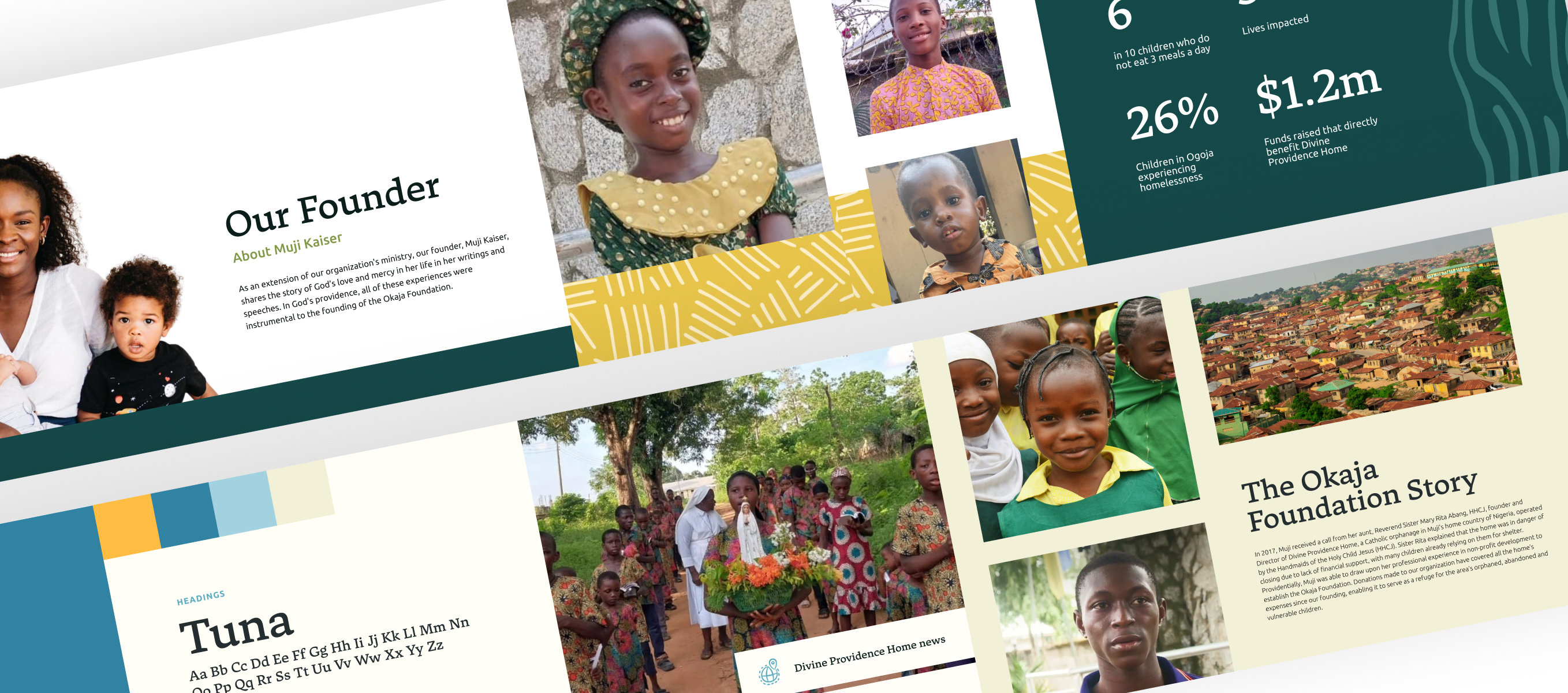
Since the Foundation had a dedicated base of supporters, and a limited runway before an upcoming PR event, we focused on "tuning up" the brand rather than reworking it. This plan respected time and financial constraints, as well as the relationship supporters already had with the brand. We focused on a light brand identity workshopping session, experimenting with slight modifications to colors, fonts, and compositions.

Next we moved to website architecture and copywriting guidance. Having addressed the organization's different audience groups early on, we could now make content decisions tailored to our audience insights. We articulated the unique relationship between the Foundation and the entities it supports, mapping the donor journey, and identifying what a first-time visitor needed to see and feel in order to engage with the website.

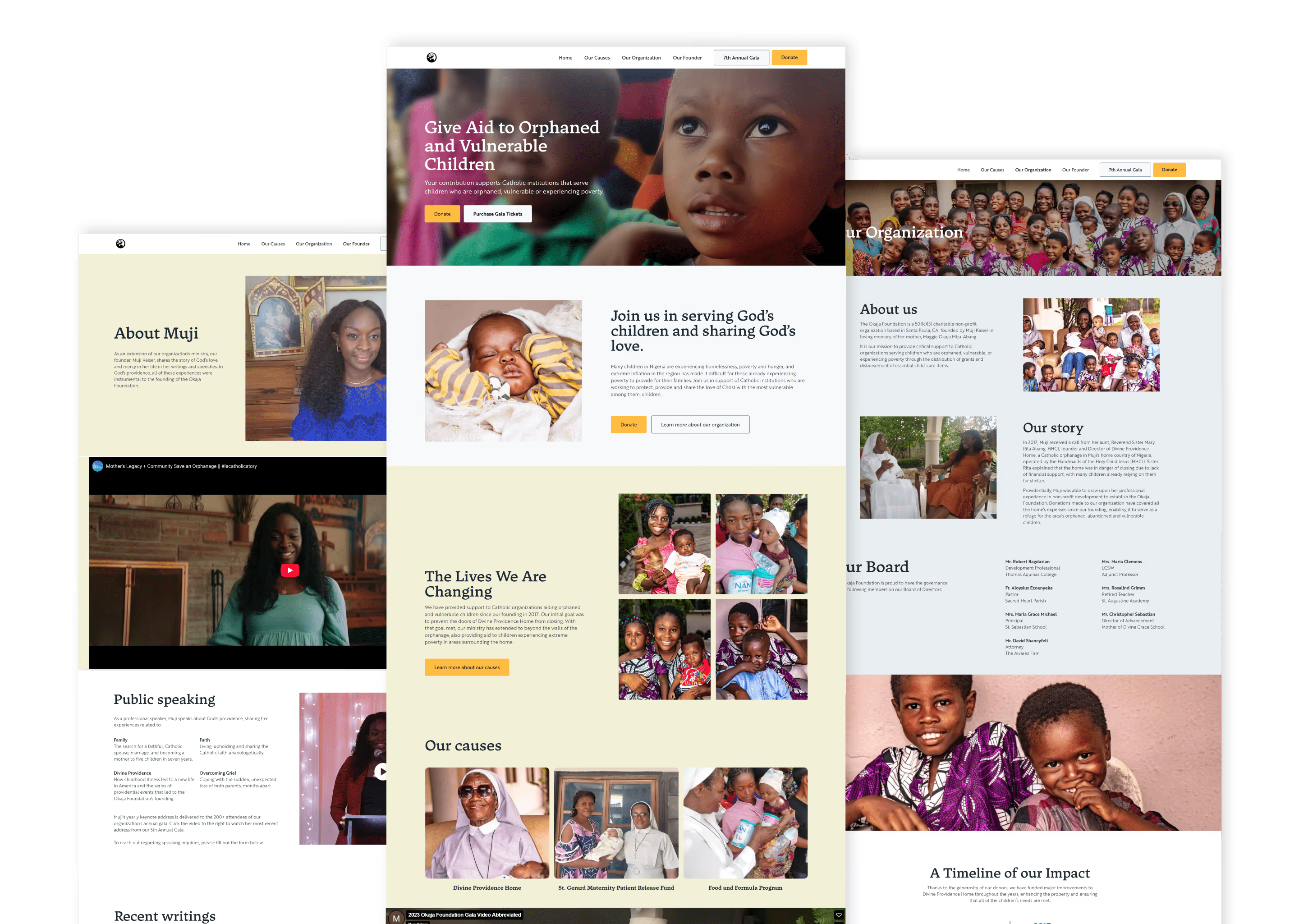
The content architecture paved the way for web design, and from there, I built out the multipage Webflow website. With a mobile first audience of 60%+ mobile users, we prioritized a mobile responsive website. It was important to the Foundation to keep site visitors on the page and lower bounce-rate, so we focused on reworking the existing donations flow from an outbound page to a custom-coded donation pop-up. Not only did this improve site rankings, but it also created a smooth pipeline to make online giving more seamless.

We also leveraged an email subscription flow through HubSpot integrations, and cleaned up Hubspot lists to ensure a clean experience both on the front-end and back-end of the experience.

The results were not just a beautiful, professional, and functional website, but a website journey intended for more donations, more supporters, and more publicity for the Okaja Foundation.
Then / Now

Then

A site that reflected the past

The DIY website that was built at the Foundation's outset signaled an organization that was only starting out, which couldn't have been further from the truth.

Online giving friction

Online donations redirected visitors off-site entirely, creating drop-off at the most crucial moment

No mobile experience

The original website was not mobile-friendly. Crucial parts of the Okaja story were not displaying properly, or cut off entirely, meaning the Foundation wasn't being communicated at its best.

Buried impact

Seven years of hard-won accomplishments were not fully showcased, impacting the trust-building needed to expand the Foundation's audience and circle of supporters

Now

A website positioned for the future

A custom, responsive, and modern website that supports the organization through major updates, PR events, and campaigns.

Online giving, on-site

Integrated donation experience keeps donors onsite— no lost momentum and higher SEO rankings.

Mobile-first design

With over 64% of website traffic from mobile devices, a responsive, mobile-first website invites mobile users in, rather than turning them away.

Highlighted impact wins visitor trust

Milestones and program outcomes are engagingly and strategically displayed so donors see exactly where money goes and can feel confident in the Foundation

Capabilities

  • Website Audit
  • Brand Guidelines (Web)
  • Content Architecture
  • Webflow Web Design & Development
  • Online giving integration & testing
  • Hubspot List Management
  • Search Enginge Optimization
  • Google Analytics
  • Website Maintenance
  • Post-launch Support & training
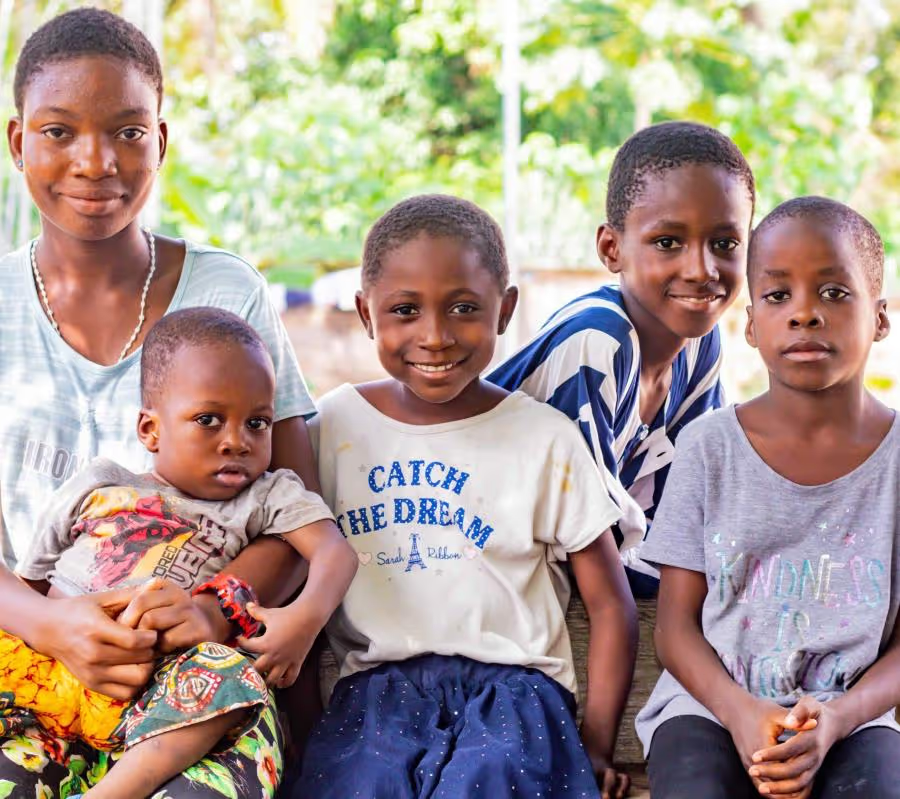
Five smiling Nigerian children sitting together outdoors with green foliage in the background.

The results

3x

Average monthly visitors, sustained after launch*

8x

Peak month traffic relative to previous average*

*Data from third-party sources

Over a year after our initial engagement, the results were in: a steady baseline of site visits triple that of the average monthly visits to the original website. Even more exciting, when the Okaja Foundation's director was featured on the Lila Rose Show, we partnered again to position the website to best capitalize on the attention. We developed a funnel strategy to turn new, highly-motivated first-time visitors into email subscribers, leading to record high website visits in one day, and online donations and new newsletter subscribers within hours of the episode drop. And with that email signup flow already in place, the Foundation captured a wave of first-time visitors as long-term subscribers — supporters who might otherwise have clicked away and never returned.

Key Insights

Web traffic is not the end goal

Web traffic alone is not a strategic objective. Rather, traffic is a tool that can help unlock major goals--if you know how to channel it properly. Doing the upfront work of clarifying your objectives, understanding relevant audience groups, and mapping a funnel that aligns with them--all this sets up the proper conditions for conversion. For the Okaja Foundation, having a game plan before major events hit meant we were ready to turn raw traffic into donations, newsletter subscriptions, and higher web rankings.

Metrics reveal problem areas

Before you can plan and marketing strategy, you need to know the lay of the land currently--what is working and what is holding you back. My first decision when I started working with the Okaja Foundation was to pull website data over the entire year prior to our partnership. This data provided a deep understanding of the digital obstacles the Foundation faced, and consequently, guided development of specific strategic solutions. With that hard data in place and with Google Analytics set up, we were able to track success in real time and adjust as needed.

Metrics interpret success

In order to truly know how successful your website and marketing campaigns are, you need to have a measurement system in place. Tools such as Google Analytics give granular insight into traffic, user engagement, and overall performance. Tracking and comparing these numbers over time--especially before and after significant events--gives decision makers data-backed information needed to measure and plan for success. While working with the Okaja Foundation, information from Google Analytics, Hubspot and their dedicated donation platform allowed us to track success in real time and adjust as needed.

Your work is ready for a wider audience.
Is your brand?